A space for thoughts on writing, memory, literature, and the inward journey.
Reflections is where my writing pauses—where I look at the moments that shape what I write—the pauses before a sentence is formed, the silences that stretch out between languages, the subtle conflicts of translation, and the long time it takes for an idea to ripen. As a bilingual writer who works in Bengali and English, I am often caught between two worlds of expression. This is a place for meditations on craft, reading, literary memory, and the changing world of storytelling. I sometimes write about the art of fiction; sometimes about poetry, language, or emotion as it runs beneath stories. These essays are not arguments or manifestos. They are a series of conversations—with literature, with readers, and with myself.
***
-
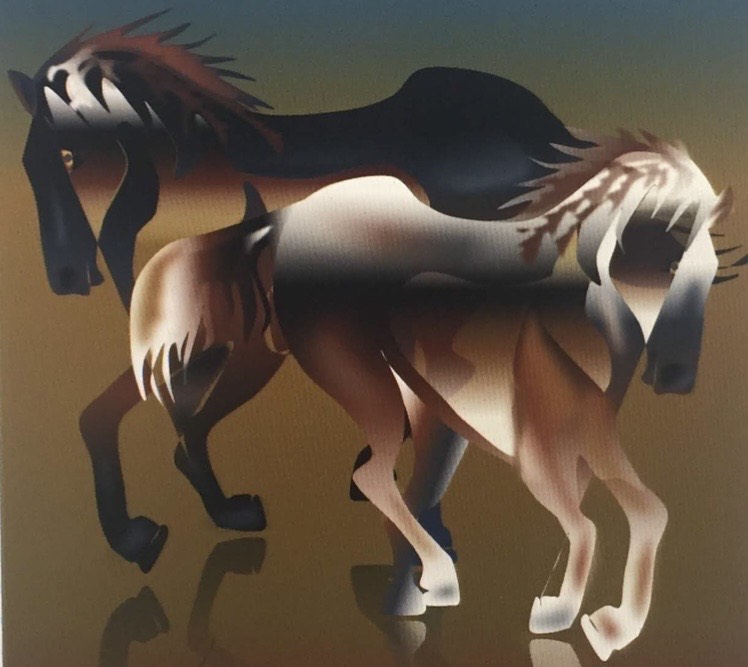
Word Painting: When a Writing Tool Becomes a Brush.
I paint in Microsoft Word. Most people smile when they hear this. Word is writing software — what does it have to do with painting? But that moment of disbelief is precisely what I find most interesting. It begins with a single line. I select a line segment from the Shape tool in Microsoft Word, and then, with the mouse, that line slowly finds its form. It bends, pauses, meets other...
-
Writing in Two Languages
Some days I start a sentence in Bengali and finish it in English. There is no deliberate plan. The words just find their own way. Writing between two languages isn’t just about translating—it's about listening. You pay attention to what can’t quite make the leap and to what crosses over anyway. Bengali holds memory in a different way. For me, it’s full of childhood, the background noise of family, and books that taught me how silence and rhythm feel. English does something else. It creates space. It sharpens some feelings, puts a new spin on my hesitations, and sometimes brings things into the open that Bengali prefers to keep hidden. Writing in both languages means living at the edge of things. There’s always this quiet back-and-forth—not just between words, but between ways of seeing. A phrase that feels close and warm in one language suddenly seems distant in the other. A silence that feels natural in Bengali turns into something you have to spell out in English. This in-between space isn’t a problem. It’s an advantage. I get to watch how meaning shifts as it moves. I learn to wait for the right word and to accept that sometimes there just isn’t one. Everything I write here grows out of that space—out of the pauses, the rough spots, and the reminder that language isn’t only a tool. It’s a way of being. If this turns into a conversation, it’ll be shaped by all the crossing back and forth, by returning again and again, and by listening for what manages to survive the journey.